

A simple idea with powerful results: School Open Streets
Five years of learning, now shared: a new guide for School Open Streets
Merri-bek City Council and the City of Kingston have launched a new national School Open Streets Guide and Toolkit, sharing years of practical experience to help local governments across Australia create safer, calmer and more welcoming streets around schools.
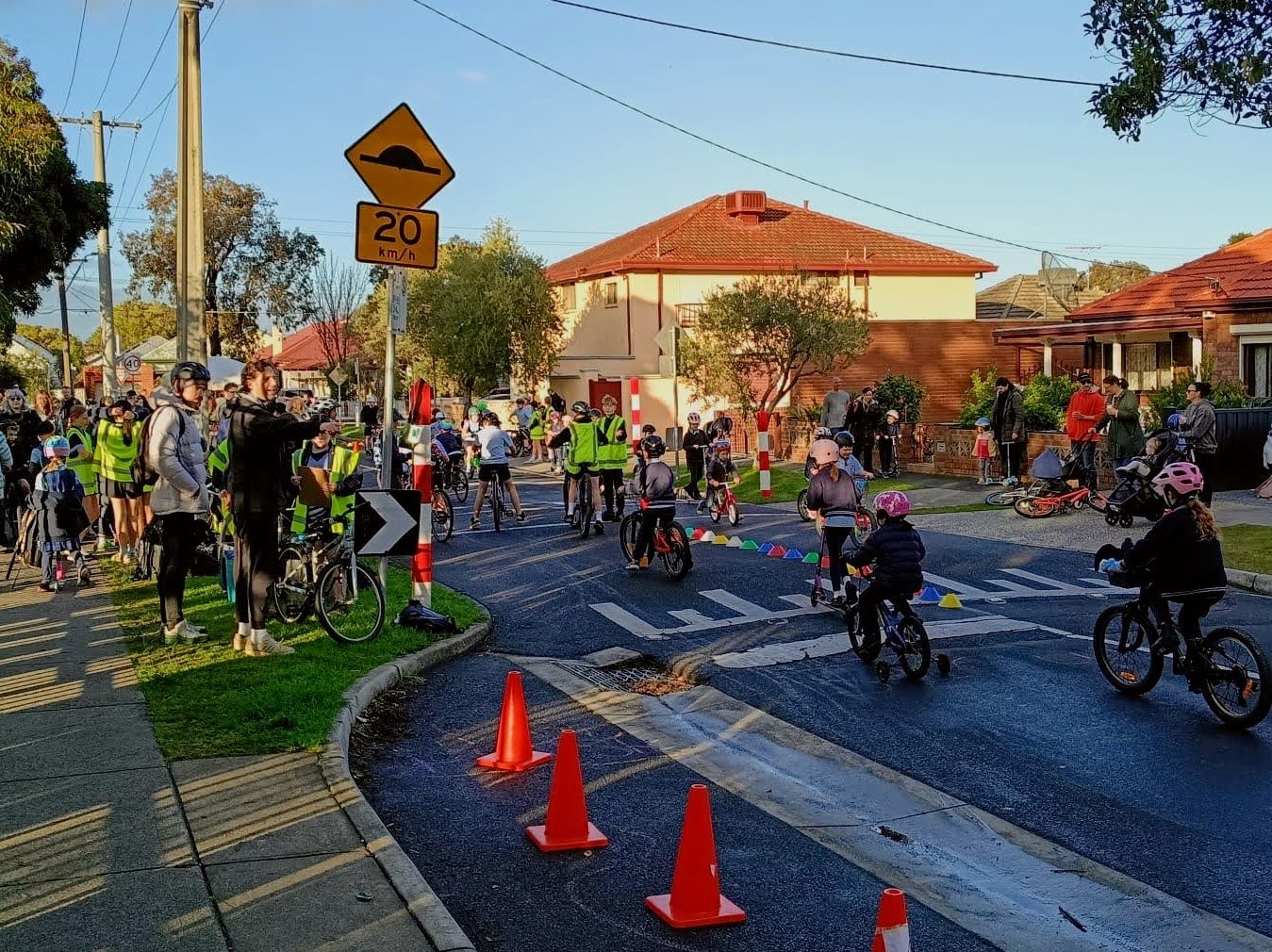
The guide was launched last Friday at Coburg North Primary School, alongside one of the school’s parent-led Open Streets event. This meant the street outside the school became a place for children and families- walking, riding, scooting, playing and spending time together.
On the way there, Eukai’s Clare Huggins noticed something that provided a nice bit of context for the day: young children travelling independently along O’Hea Street’s shared path, with raised crossings giving them priority across side streets. It was a good reminder that creating safer school journeys isn’t just about what happens immediately outside the school gate, but the surrounding network matters too.
From local trials to a resource
Open Streets temporarily restrict through traffic on streets around schools during drop-off and pick-up times, creating more space for children and families to walk, ride and scoot.
The concept is generally known internationally as School Streets, with more than 1,250 programs now operating around the world. In Australia, the first Open Street was piloted by Merri-bek City Council and Bicycle Network at Brunswick East Primary School in March 2021.
Five years later, Merri-bek has delivered Open Streets across ten local schools and pioneered a School-led model in which trained parent volunteers can run events more regularly. Since 2023, parent volunteers have delivered 85 Open Streets days across five Merri-bek schools.
Kingston has brought its own experience to the guide through its Open Street program at Chelsea Primary School. Eukai’s James Laing, whose children attended the school, was involved in supporting the school and Council to get the initiative underway.
The two councils have now turned that practical experience into a resource other local governments can use.
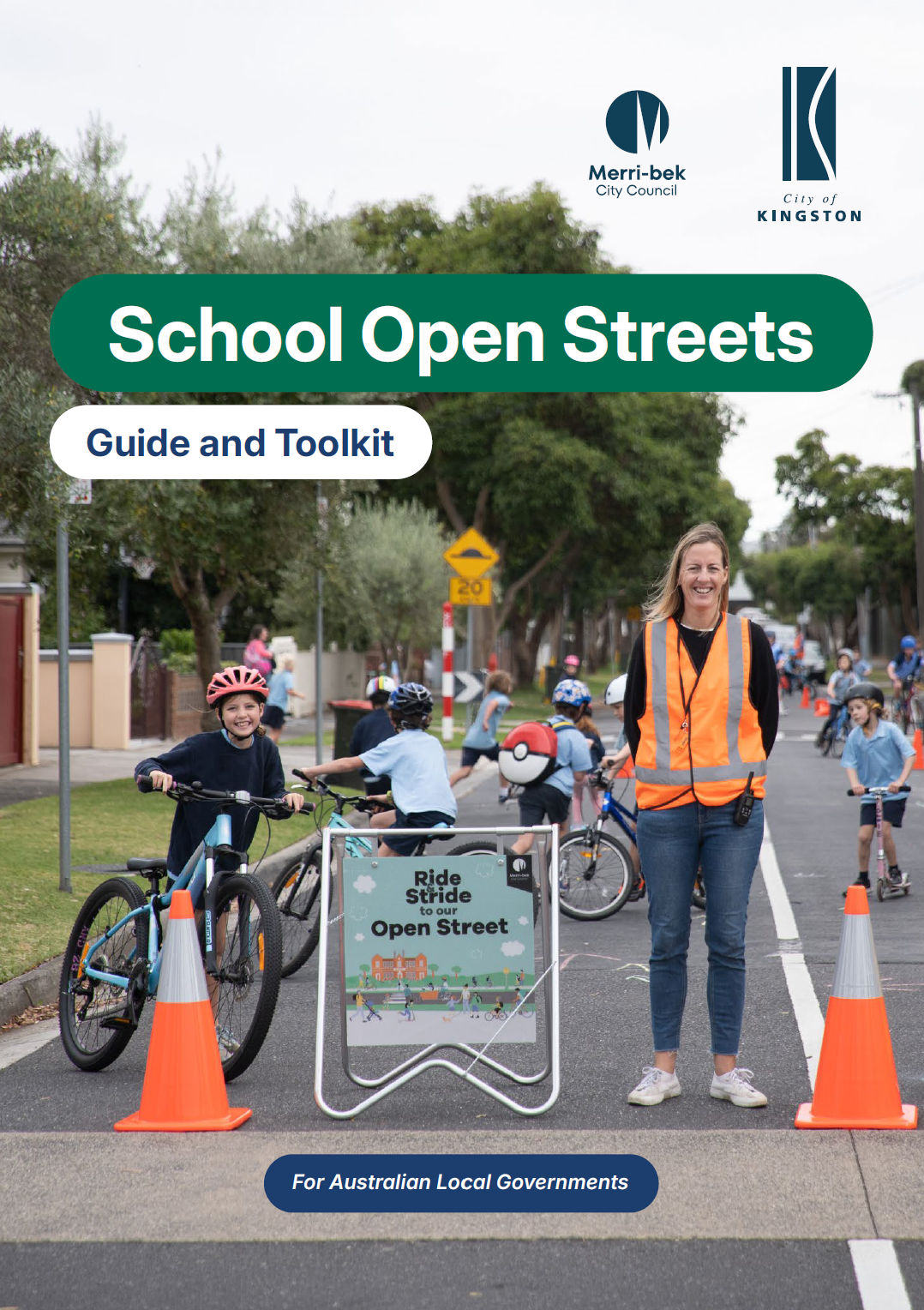
Launched by Merri-bek and Kingston City Councils
Open Streets initiative creates temporary car-free spaces around schools during drop-off and pick-up times.
A simple idea with powerful results.
Capturing the hard work behind Open Streets
An Open Street is a relatively simple idea. Delivering one successfully can be less simple.
Councils need to work through traffic management, accessibility, permits, risk, resident access, school engagement, communications and evaluation. They also need to build support among school communities and local residents.
This is where the new guide is particularly useful. Rather than simply explaining why Open Streets are worthwhile, it sets out how to deliver them.
It includes step-by-step processes, indicative timelines and costs, communications material, traffic and risk considerations, evaluation methods and templates that councils can adapt to their own circumstances.
Importantly, it covers two models:
· Council-led Open Streets, where councils establish and deliver the initial program with a school; and
· School-led Open Streets, where trained volunteers take greater responsibility for ongoing delivery with council support.
That progression is important for councils looking for ways to support community-led initiatives and for the sustainability of the event as Council’s start to work with more and more schools.
Testing a different way of using our streets
The results gathered through Australian Open Streets programs are encouraging. The guide reports a 20 per cent increase in active travel on Open Streets days, with 80 per cent of families saying the street felt safer. Schools delivering ongoing School-led Open Streets have also recorded sustained increases of 10–20 per cent in active travel on regular school days.
There is another benefit that is harder to capture in the numbers. Open Streets give communities an opportunity to experience a street operating differently before longer-term changes are considered.
That can be valuable for councils. Changes to streets can be contentious when they exist only as plans or proposals. A temporary intervention lets people experience the change, observe how it works and provide feedback based on something tangible.
The guide describes Open Streets as bringing together behaviour change, infrastructure and policy rather than relying on any one approach in isolation.
Congratulations to everyone involved in developing and publishing the guide.
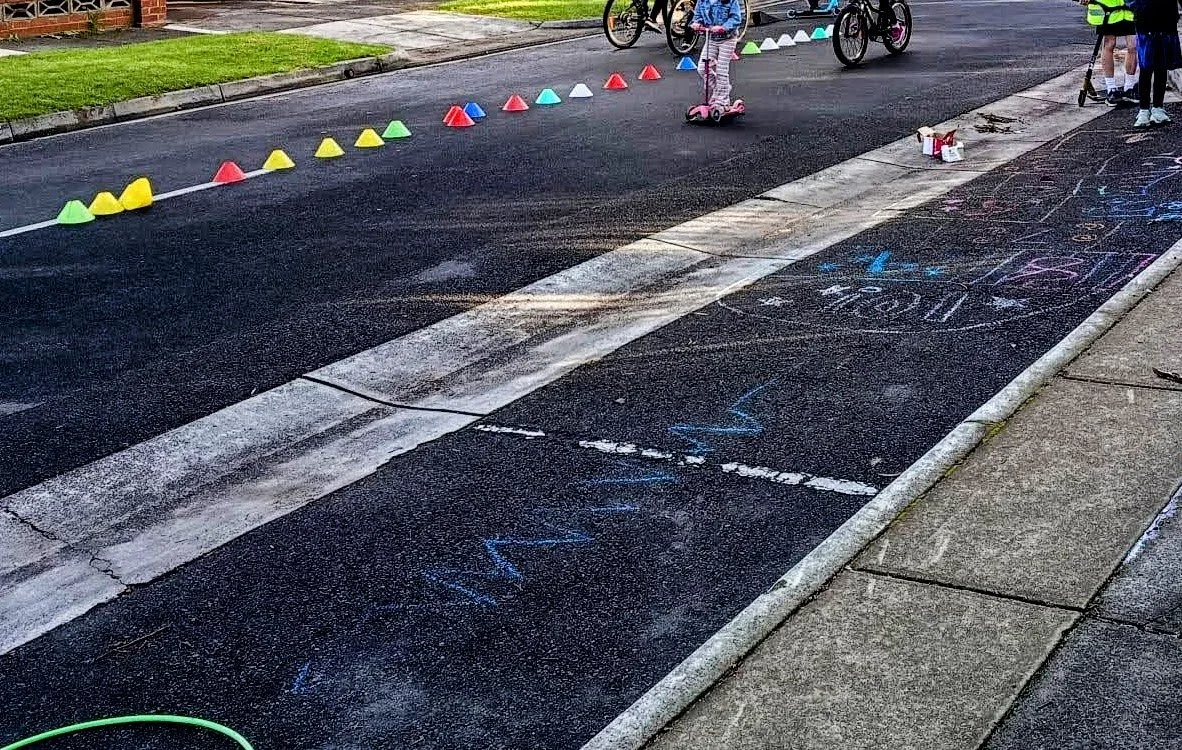
Traffic Management adopts a more ‘friendly tome’
If you want to hear more from a volunteer parent (James Laing), or the primary writer of the National Guide for School Travel (Clare Huggins) - reach out!
